
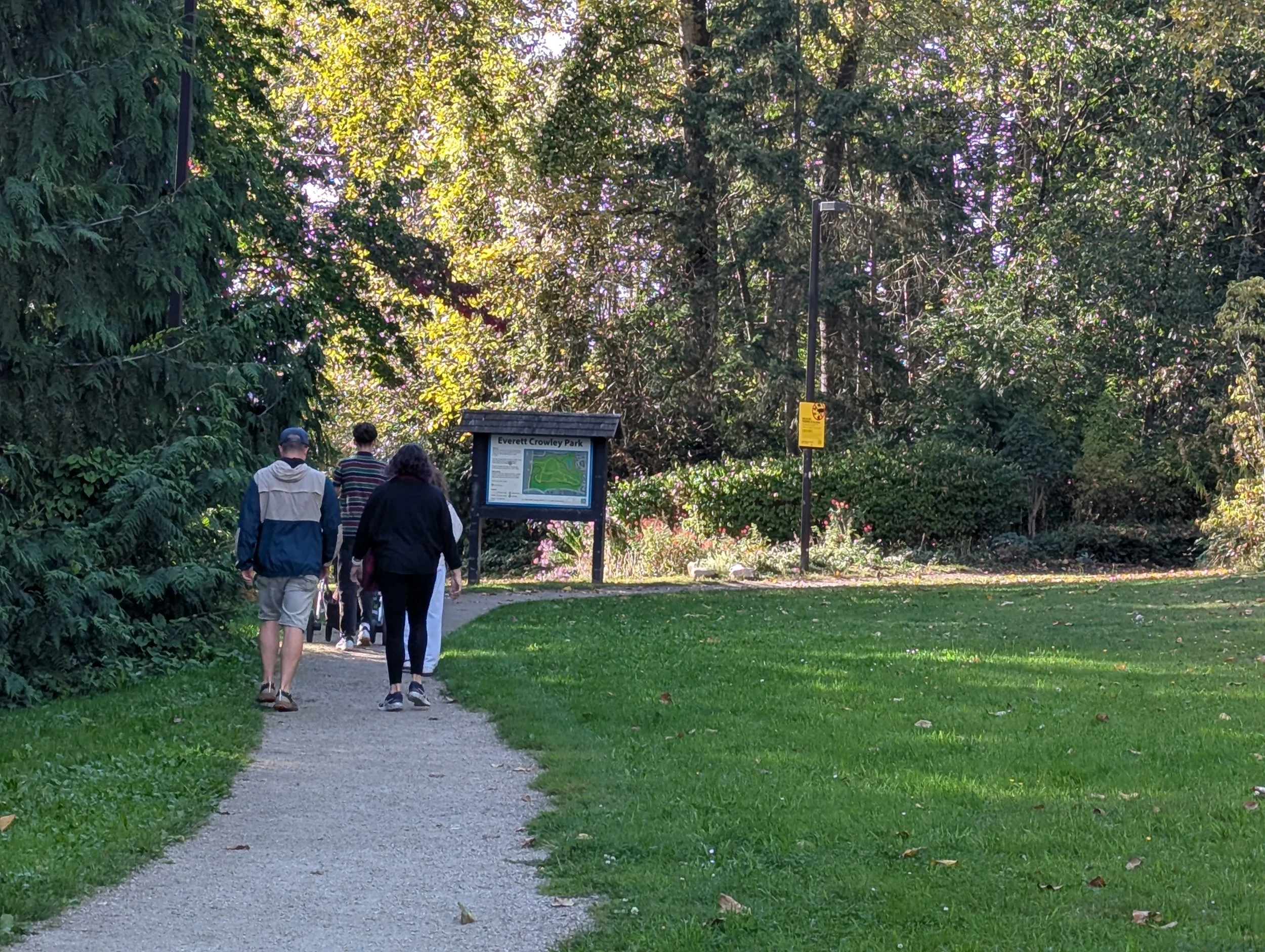
Park Map
Since the foundation of ECPC in 1987, we have been stewarding numerous different sites in Everett Crowley Park with successful and established native habitat rehabilitation over the decades. Below are descriptions of our active restoration sites.
Explore Everett Crowley Park
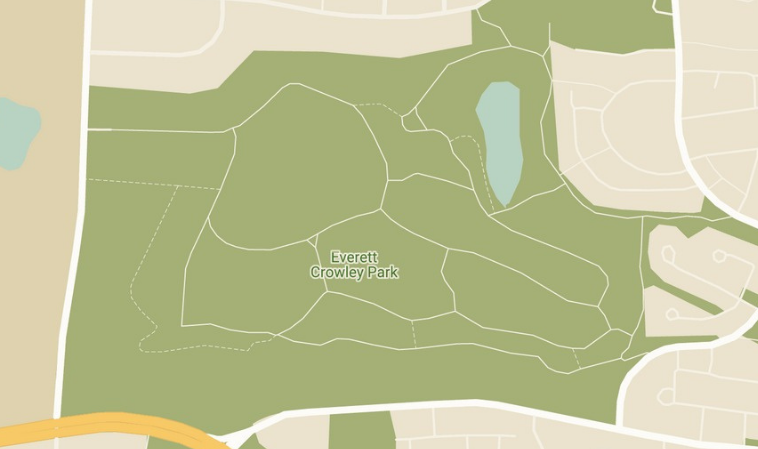
Kerr St.
🐸
🦆🗻 🐝 🍓
🍀 🌿Legend
🐸 Chorus Frog Corner
🗻 Mount Everett
🐝 Pollinator and Healing Garden
🍓 Berry Way
🌿 Fern Gully
🦆 Avalon Pond
🍀 Area 4
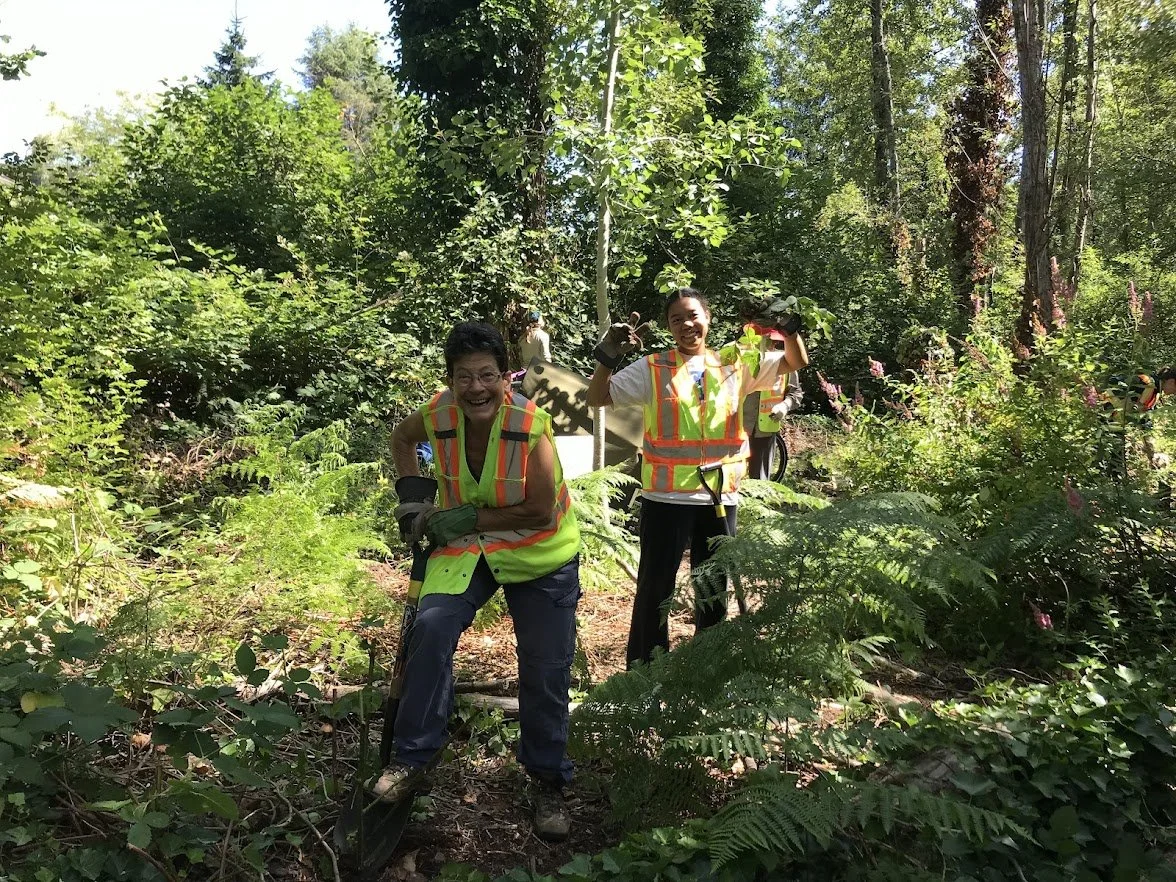
Chorus Frog Corner
ECPC’s newest restoration site, established in 2025 thanks to a grant from the Habitat Conservation Trust Foundation. This site is bursting with naturally growing Indigenous species such as salal, red huckleberry and hardhack, which are seen less frequently in the rest of the park, alongside being a home for Native Pacific Chorus Frogs. Volunteers have been working to free Indigenous plants and restore amphibian habitat by removing invasive Himalayan Blackberry and English Ivy. In 2026 a natural dead fence was woven from invasive ivy and black locust harvested from the park and installed at this site.

Mount Everett
Once the site of the paragliding club, Mount Everett is now an open sloped sunny restoration site. Thanks to the hard work of many volunteers since 2020, this site is bursting with Indigenous thimbleberry and Red flowing currant. Having undergone many rounds of Indigenous planting, Mount Everett is now in its maintenance phase to help Indigenous plants and pollinators thrive.
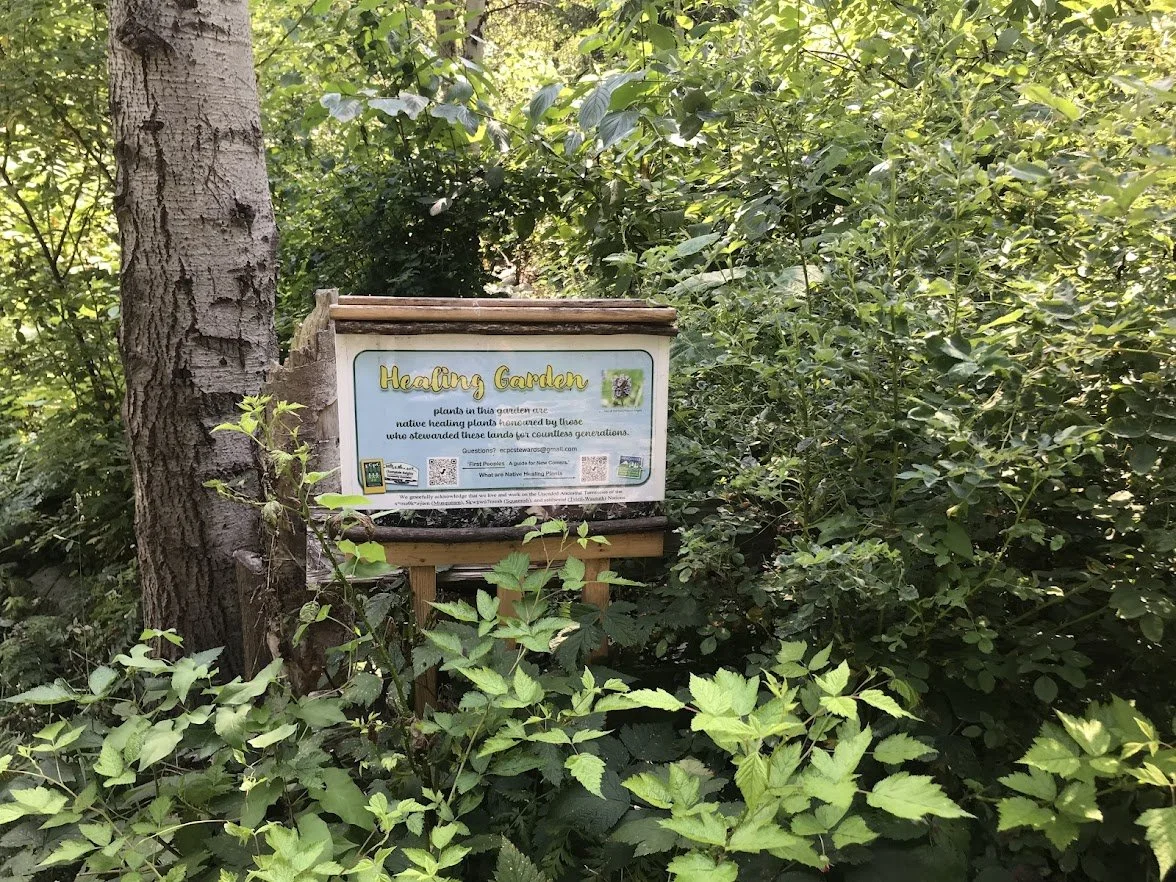
Pollinator and Healing Garden
The Pollinator Garden was established in 2015 to support the pollinators of the park. The Healing Garden was created in 2020 by two ECPC volunteers who worked to remove invasive blackberries, and replant native foliage with cultural importance to Indigenous peoples. The pollinator and healing garden support the populations of solitary bees that have occupied the mason bee hotel in the gardens for over 15 years.
Berry Way
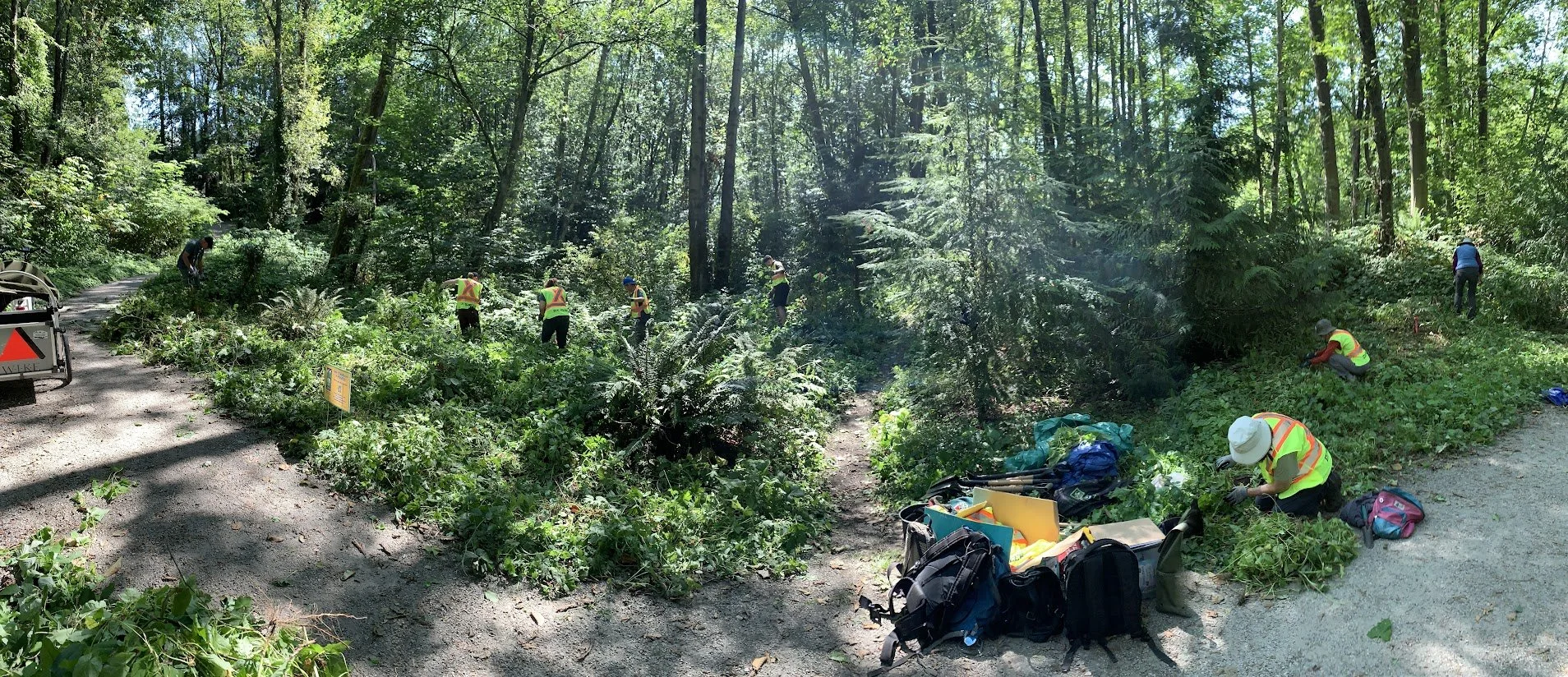
Nestled to the South East of Avalon Pond, Fern Gully is a lush pioneer forest with naturally occurring Red Alder and Black Cottonwood trees, and bursting with Sword Ferns. Starting in 2024, volunteers have dedicated their time to remove invasive Himalayan Blackberry, Bindweed, and English Ivy that threaten Indigenous plants at this site. In fall 2025, it began its first round of Indigenous species planting. It is also the site of a UBC research project focusing on climate resilience and Salmonberry.
Fern Gully
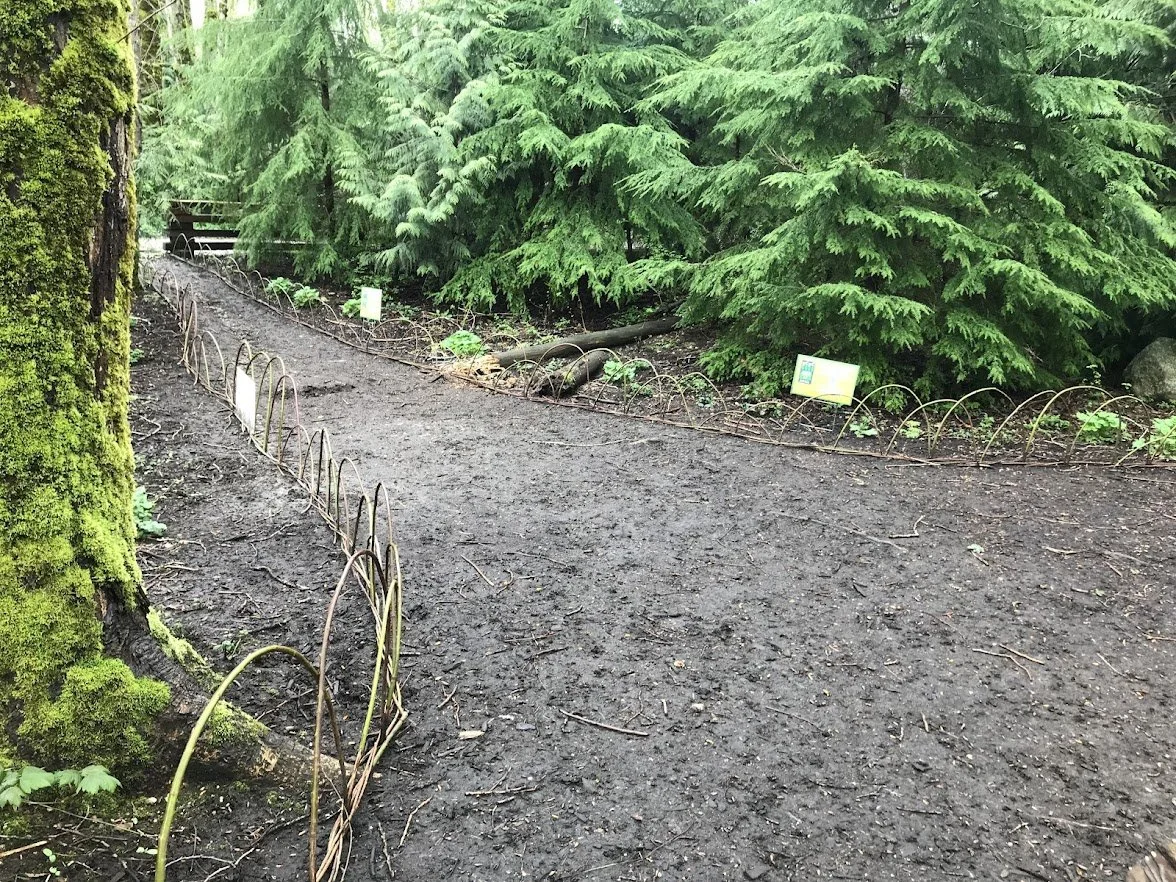
ECPC’s smallest site has been richly replanted with shade loving Indigenous species, and this site acts as a majestic trail to Avalon Pond. Fresh Air Learning, a local forest school, installed a beautiful natural fence, made from Red Osier Dog Wood and Willow, at this site in 2025.
Avalon Pond
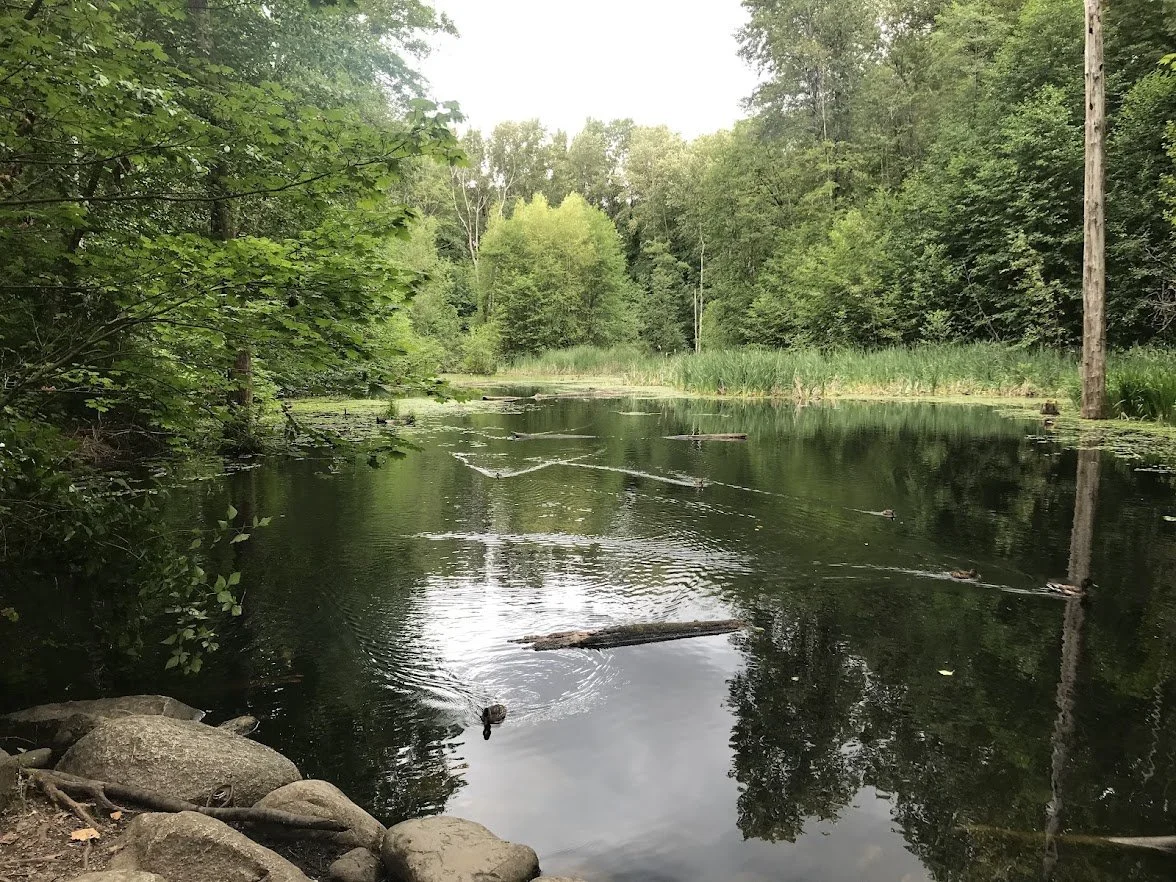
Avalon Pond is a biodiversity hotspot and home to a diversity of species including North Western Salamander, bufflehead, herons and devils club. Since 2023 ECPC has worked hand in hand with Echo Ecological to restore and monitor this sensitive area. Avalon Pond has been the site of many research projects including water monitoring, wildlife cameras, and bat monitoring.
Read more about Avalon Pond here